

Rent Agreement Format for Delhi: Sample and Key Clauses
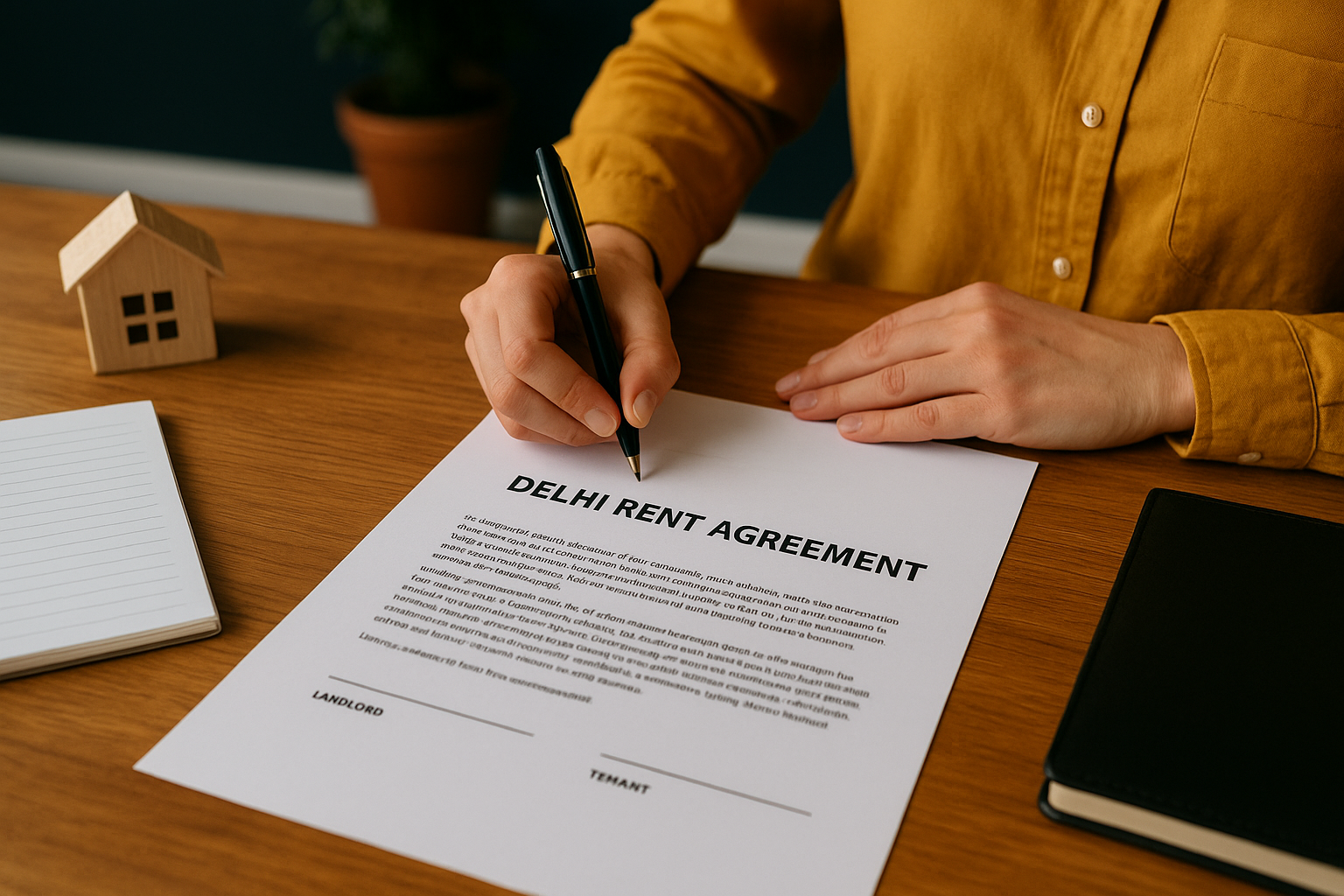
A rent agreement format Delhi landlords and tenants actually use looks different from a generic template you find online. It needs specific references to the Delhi Rent Control Act, 1958, stamp duty under the Indian Stamp Act, and registration requirements under Section 17 of the Registration Act, 1908, if the tenure exceeds eleven months. Skip these details and you risk a document that a Delhi court will not enforce.
This article gives you a ready-to-use sample covering rent amount, security deposit, lock-in period, maintenance responsibility, and notice period clauses, drafted the way Delhi sub-registrars expect to see them. You also get a clause-by-clause breakdown so you understand why each term exists, not just what to fill in.
By the end, you will have a practical template you can customize for your own lease, along with the common drafting mistakes that lead to disputes or registration rejections in Delhi. For lawyers handling volume drafting, tools like LeXi Desk can flag risky clauses and generate variations automatically, cutting review time without replacing your judgment on the final document.
Why a Delhi-specific rent agreement format matters
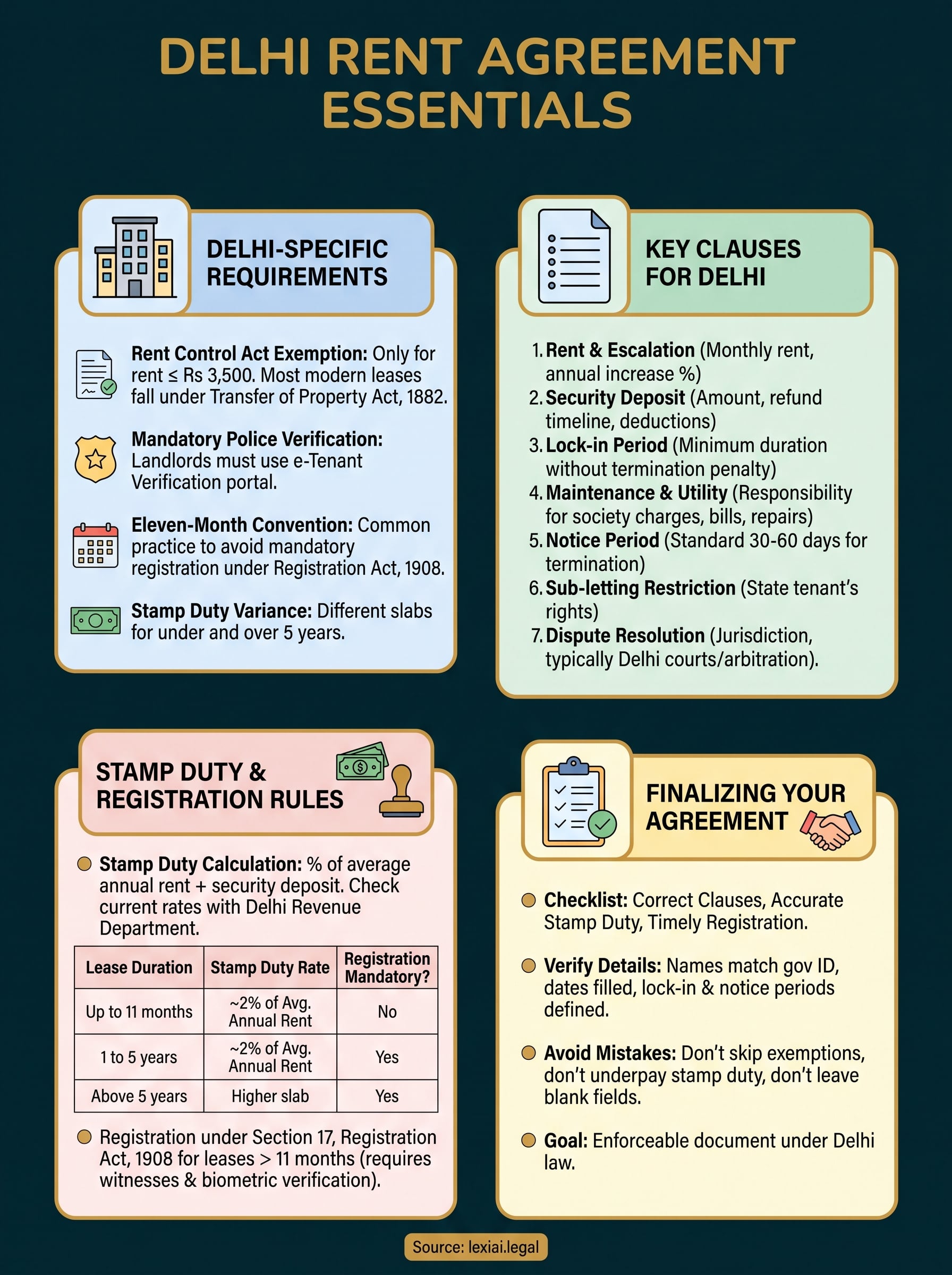
A lease drafted for Mumbai or Bangalore, where a leave and license agreement format is the norm, will not hold up the same way in Delhi. Every state runs its own version of rent control law, and Delhi's framework carries quirks that generic templates simply ignore. The Delhi Rent Control Act, 1958, for instance, only applies to properties where the monthly rent is Rs 3,500 or below, which means most modern residential leases in the capital actually fall outside its protective umbrella and depend entirely on the Transfer of Property Act, 1882, and your contract terms instead.
A rent agreement that ignores Delhi's registration and police verification rules is not a shortcut, it is a liability waiting to surface.
That gap changes how you draft, and the usual drafting skills for precise legal documents matter more here than any template. Skip the exemption clause explaining why the Rent Control Act does not apply, and a tenant can later argue for rent control protections you never intended to grant, dragging you into years of litigation before the Rent Controller.
What makes Delhi different from other states
Beyond the Rent Control Act carve-out, three local requirements shape every valid rent agreement format Delhi residents rely on:
- Mandatory tenant verification: Delhi Police requires landlords to submit tenant details through the e-Tenant Verification portal, and your agreement should reference this compliance step.
- Eleven-month convention: Most Delhi leases run for eleven months specifically to avoid mandatory registration under Section 17 of the Registration Act, 1908, though registering longer-term leases remains safer for high-value properties.
- Stamp duty variance: Delhi calculates stamp duty differently for leases under and over five years, and the format must reflect the correct duty slab or risk rejection at the sub-registrar's office.
Getting these details wrong does not just cause paperwork delays. Courts in Delhi have refused to admit unregistered agreements as evidence in eviction and rent recovery disputes, leaving landlords without a paper trail to prove their terms. Lawyers drafting these documents at scale often lean on platforms like LeXi Desk to auto-check jurisdiction-specific clauses before a document goes out for signature, catching gaps a manual review might miss.
How to fill in and customize your rent agreement
Start by pulling out a rent agreement template Delhi landlords use and treat it as a skeleton, not a finished product. Fill in the names and addresses of both parties exactly as they appear on government-issued ID, since a mismatched Aadhaar or PAN entry is one of the most common reasons sub-registrars send documents back for correction, and the same holds if a signatory acts under a power of attorney. Enter the property description with survey number or unit details, the agreed rent, and the security deposit amount in both figures and words to avoid disputes later.
Next comes the part most people rush through: dates. Specify the lease start date, the eleven-month or longer tenure, and the notice period for termination, usually thirty to sixty days in Delhi practice. Do not leave the maintenance clause vague; state clearly whether the landlord or tenant pays society charges, electricity, and water bills.
A blank field in a rent agreement is not flexibility, it is an invitation for the other party to fill it in their favor later.
Customizing for your situation
Every lease needs adjustments beyond the boilerplate. Use this checklist before finalizing:
- Add a sub-letting restriction if you do not want the tenant renting out rooms independently.
- Include a pet clause or furnishing inventory for furnished apartments.
- Insert an e-Tenant Verification reference confirming the landlord will report the lease to Delhi Police.
Lawyers drafting multiple leases often run the filled draft through LeXi Desk to flag missing fields before signature.
Key clauses every Delhi rent agreement should include
Every valid rent agreement format Delhi parties sign needs a set of clauses that go beyond names, rent, and dates. These clauses protect both sides when disputes reach the Rent Controller or a civil court, and since a lease is a contract governed by the Indian Contract Act, 1872 bare act, missing even one weakens your position in a dispute.
A rent agreement without a clear lock-in clause leaves the tenant free to walk out the next month, and the landlord with no rent for the remaining term.
Focus on these seven clauses when drafting or reviewing a lease:
- Rent and escalation clause: State the monthly rent and any agreed annual increase, typically 5 to 10 percent in Delhi practice.
- Security deposit terms: Specify the deposit amount, refund timeline, and permissible deductions for damages.
- Lock-in period: Define the minimum months neither party can terminate without penalty, usually three to six months.
- Maintenance and utility responsibility: Clarify who pays society charges, electricity, water, and repair costs.
- Notice period for termination: Set thirty to sixty days as the standard in Delhi leases.
- Sub-letting restriction: State whether the tenant may sub-let any part of the property.
- Dispute resolution clause: Name the jurisdiction, typically Delhi courts, and whether arbitration applies first.
Government guidance on stamp duty and property documentation is available through the Delhi government's revenue department, which is worth checking before finalizing rates. Landlords managing several properties often use LeXi Desk to generate these clauses consistently across leases, reducing the chance a critical term gets dropped from one draft to the next.
Stamp duty and registration rules in Delhi
Getting the stamp duty calculation right is where most self-drafted rent agreement format Delhi templates fall apart. Delhi charges stamp duty as a percentage of the average annual rent plus the security deposit, and the rate shifts depending on lease duration. For leases up to five years, expect to pay 2 percent of the average annual rent; for longer terms, the duty rises, so check the current slab before you print the final draft.
Underpaying stamp duty does not save you money, it just delays the day a court refuses to look at your agreement.
Here is a quick reference for common Delhi lease durations:
| Lease Duration | Stamp Duty Rate | Registration Mandatory? |
|---|---|---|
| Up to 11 months | 2% of average annual rent | No |
| 1 to 5 years | 2% of average annual rent | Yes |
| Above 5 years | Higher slab, calculated per rent | Yes |
Jurisdiction rules on registration come from Section 17 of the Registration Act, 1908, which makes registration compulsory once a lease crosses eleven months. Once you cross that threshold, you also need two witnesses and biometric verification at the sub-registrar's office, much like registering a sale deed for a property transfer. Officials at the Delhi government's revenue department can confirm the exact duty rate for your rent value before you buy stamp paper, since rates are revised periodically and an outdated figure means your document gets rejected at submission.
Finalizing your Delhi rent agreement
A solid rent agreement format Delhi landlords and tenants can rely on comes down to three things: correct clauses, accurate stamp duty, and timely registration when the tenure demands it. Skip any one of these, and you end up with a document that looks complete but fails the moment a dispute lands before the Rent Controller or a civil court.
Before you print the final draft, run through the checklist once more: names matching government ID, dates filled in, lock-in and notice periods defined, and the correct stamp duty slab applied. Treat the sample as a starting point, not a substitute for reading your specific terms twice.
Drafting one lease by hand is manageable. Drafting dozens across a portfolio or a law practice is where errors creep in. If you want clause checks and risk flags built into your workflow, try LeXi AI free and see how it handles your next Delhi lease draft.