

Rent Agreement Format: Sample and How to Draft One
Most landlords and tenants search for a rent agreement format because they need a document that holds up in court, not just a generic template pulled off some forum. A rent agreement is not a formality. It defines rent escalation, security deposit terms, notice period, and who pays for what repairs, and a poorly worded clause can cost either party months of dispute later.
This guide gives you a ready sample rental agreement you can adapt for your own use, along with a plain explanation of every clause that matters, including stamp duty requirements and registration rules that vary by state under the Registration Act, 1908.
Below, you will find the standard format used across most Indian states, a section-by-section breakdown of what each clause should say, and a step-by-step process for drafting your own agreement from scratch. If you want to skip the manual editing and generate a compliant draft in minutes, tools like LeXi Desk can build one from your specific rental terms and flag risky clauses before you sign.
What a rent agreement format must include
A proper rent agreement format covers seven essential elements, and missing even one can void the document in a dispute. Courts in India look for clarity on identity, property, money, and duration before they treat a rental contract as enforceable, which is also why a leave and license agreement format follows a near-identical structure. Think of the format as a checklist first, and a legal document second.
The core clauses every draft needs
Every rental agreement template worth using contains these sections, in this order:
| Clause | What it must specify |
|---|---|
| Parties | Full names, addresses, and ID proof of landlord and tenant |
| Property description | Address, size, furnishings, and permitted use (residential or commercial) |
| Rent and due date | Monthly amount, payment mode, and escalation percentage |
| Security deposit | Amount, refund conditions, and deduction rules |
| Tenure and renewal | Start date, lock-in period, and renewal terms |
| Maintenance and repairs | Who pays for what, and turnaround time for fixes |
| Termination and notice | Notice period for either party, and grounds for eviction |
A rent agreement is only as strong as its weakest missing clause.
Formatting details that protect you later
Beyond content, the format of the document matters just as much. Print the agreement on non-judicial stamp paper of the correct value for your state, number every page, and get both parties to sign each page, not just the last one. Government portals like the Ministry of Housing and Urban Affairs publish model tenancy rules that many states now reference directly.
Getting this structure right before you fill in specifics saves you from redrafting later. The next four steps walk through exactly how to write each clause so nothing gets left vague.
Step 1. List the parties and property details
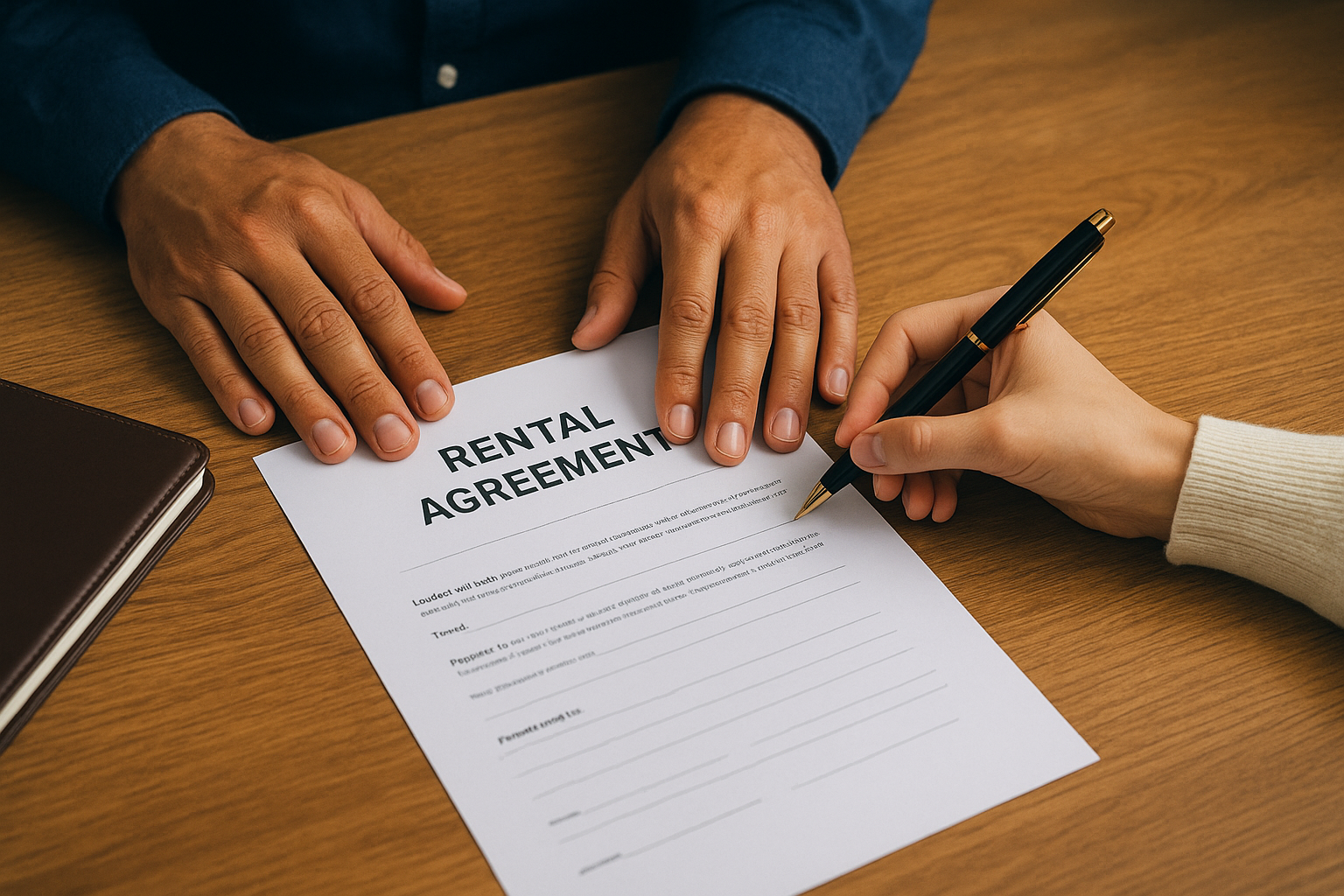
Start every draft by naming who is entering the contract and what property they are renting. This section anchors the entire rental agreement template, and vague names or addresses here create room for disputes over identity later, which is why basic drafting precision matters from the first line.
Identify the parties correctly
Name the landlord and tenant exactly as they appear on government ID, not by nickname or informal spelling. Include current residential address, PAN or Aadhaar number, and contact details for both sides. If either party is a company, name the authorized signatory and attach a board resolution or a properly drafted power of attorney.
Get the names and property description wrong, and every clause after it becomes harder to enforce.
Describe the property precisely
Write the full address, floor, carpet area, and furnishings included, down to the fixtures list if the property is furnished. State whether the use is residential or commercial, since mismatched use voids many municipal permissions.
Landlord: [Full Name], S/o [Father's Name], residing at [Address]
Tenant: [Full Name], S/o [Father's Name], residing at [Address]
Property: [Full Address], [Carpet Area] sq. ft., [Furnished/Unfurnished], for [Residential/Commercial] use
Step 2. Draft the rent, deposit, and tenure clauses
Once identities and property details are locked in, move to the money and duration terms. This is where most rental agreement disputes originate, so state every figure in numerals and words, never leave a blank for "as discussed."
Fix the rent and escalation terms
State the monthly rent, the due date, the payment mode (bank transfer, cheque, UPI), and any late payment penalty. Add an escalation clause specifying the percentage increase and the date it kicks in, typically 5 to 10 percent annually.
A rent agreement without a fixed escalation date invites a fresh argument every year.
Set deposit refund conditions
Specify the security deposit amount, usually two to ten months' rent depending on the city, and the exact conditions for refund. State the timeline for return after vacating, and list what deductions are permissible, such as unpaid dues or damage beyond normal wear.
Define tenure and lock-in
Rent: Rs. [Amount] per month, payable by [date], via [mode]
Escalation: [X]% increase effective from [date]
Security Deposit: Rs. [Amount], refundable within [X] days of vacating
Tenure: [Start Date] to [End Date], lock-in period of [X] months
State the start date, end date, and any lock-in period during which neither party can exit without penalty.
Step 3. Add maintenance, repair, and termination clauses
Once rent and tenure are settled, spell out who fixes what and how either side can exit the contract. This section prevents the most common landlord-tenant fights, the ones over a leaking tap or a sudden eviction notice.
Assign maintenance responsibilities
List minor repairs, like plumbing or electrical fittings under a fixed cost, say Rs. 1,000, as the tenant's responsibility. Major structural repairs, roof leaks, or appliance breakdowns beyond that cost should sit with the landlord. Give a turnaround time, usually 7 to 15 days, for the landlord to respond to a repair request in writing.
A rent agreement that skips repair timelines leaves tenants stuck waiting indefinitely for fixes.
Define termination and notice terms
Specify the notice period both sides must give before ending the tenancy, commonly 30 to 90 days depending on the city and lease type. Include valid grounds for early termination:
- Non-payment of rent beyond a grace period
- Subletting without written consent
- Property damage beyond normal wear
- Illegal use of the premises
State whether notice must be in writing, delivered by email, or sent through registered post, since verbal notice rarely holds up if either party disputes it later.
Step 4. Stamp, sign, and register the agreement
With every clause drafted, the last job is making the document legally valid, not just complete. This means paying the correct stamp duty, signing in front of witnesses, and registering the agreement where the law requires it.
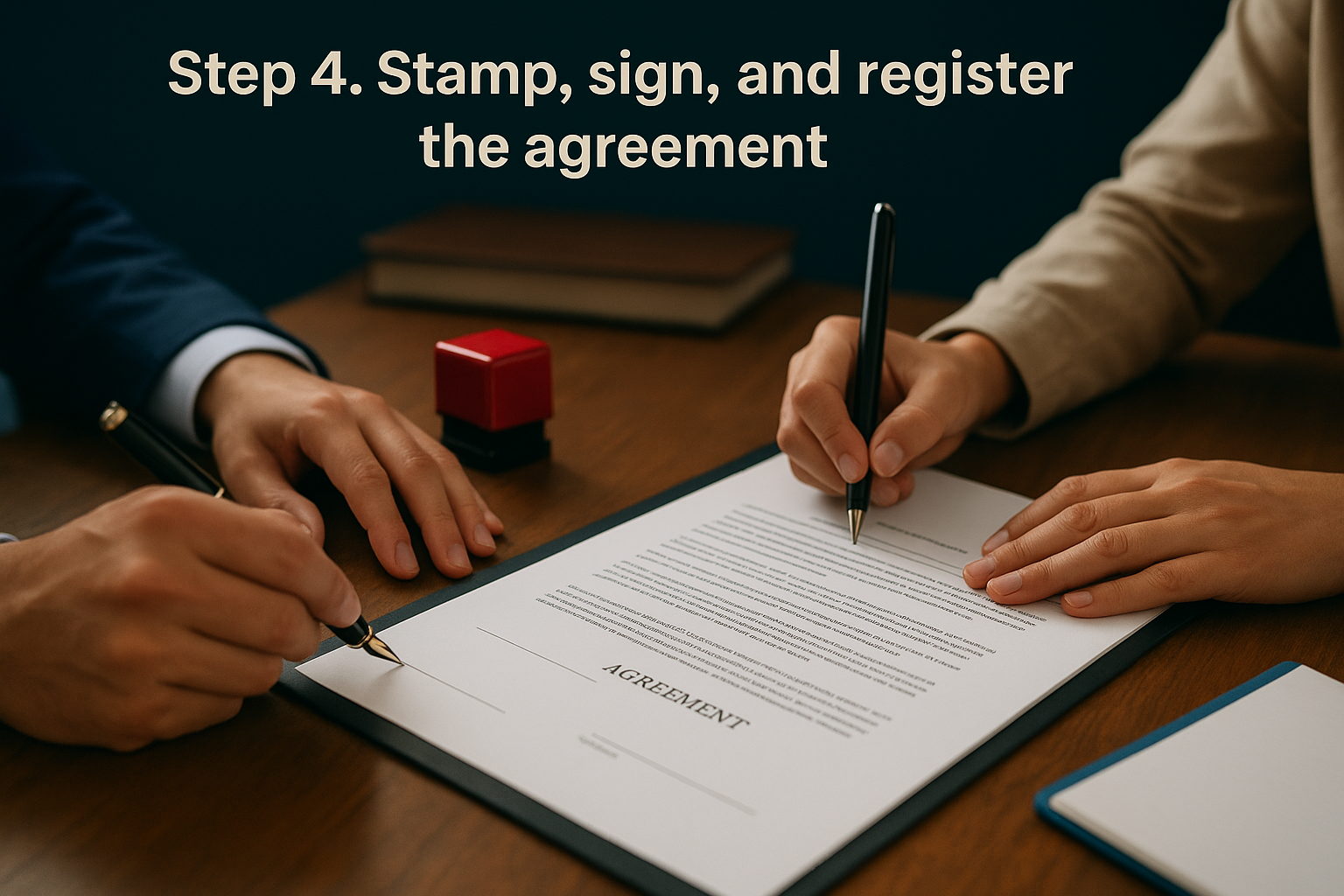
Buy stamp paper of the right value
Stamp duty rates differ by state, so check your local Stamp Act before printing the final draft. Most states now allow e-stamping through the Stock Holding Corporation of India (SHCIL), which is faster than buying physical stamp paper from a vendor.
Sign every page with witnesses present
Both the landlord and tenant must sign each page, not just the last one, and two witnesses should sign alongside them with their names and addresses recorded.
A rent agreement without witness signatures is far easier to challenge in court.
Register at the sub-registrar's office
Under Section 17 of the Registration Act, 1908, any lease running 12 months or longer must be registered, the same statute that governs how a sale deed is registered.
- Book an appointment at the local sub-registrar's office.
- Carry the signed agreement, ID proof, and property documents.
- Pay the registration fee, usually 1 percent of the annual rent.
- Collect the registered copy for both parties' records.
Getting your agreement ready to sign
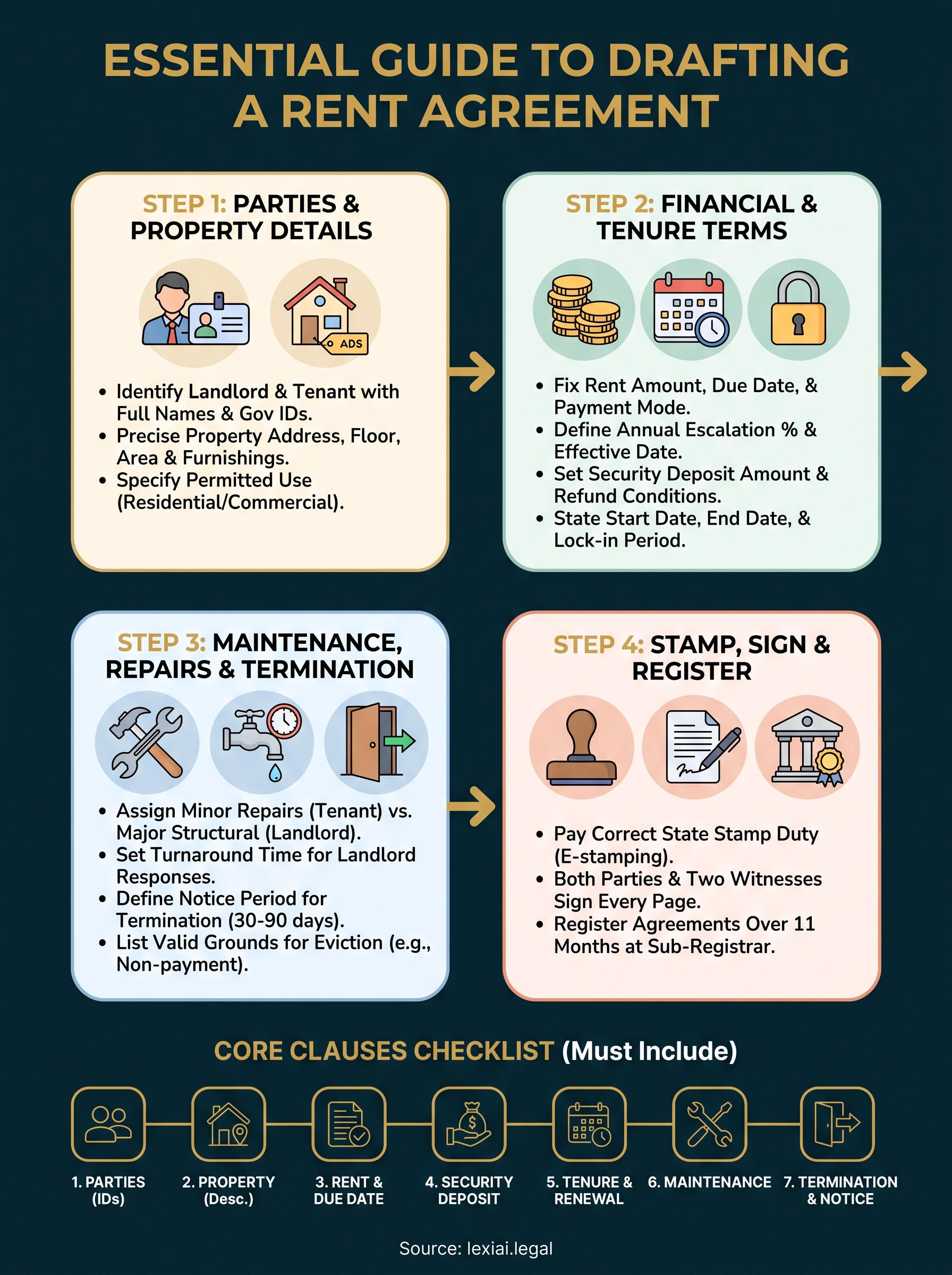
A solid rent agreement format comes down to four things done right: clear party and property details, precise money and tenure clauses, fair maintenance and termination terms, and correct stamping and registration. Skip any one of these, and you are left with a document that looks official but folds under the first real dispute.
Treat the sample and clauses above as a starting draft, not a final answer. Every property, city, and landlord-tenant relationship has its own quirks, so adjust the escalation percentage, notice period, and deposit terms to match what both sides actually agreed to, not a generic template found online.
If you would rather not draft this clause by clause, see how LeXi AI works: it generates a compliant rental agreement from your specific terms and flags risky language before you print it on stamp paper.