

Legal AI Accuracy: How Reliable Is It Really?
How accurate is legal AI right now? For well-defined legal tasks such as statute lookup, judgment search, and clause review, top systems now score above 95% on legal reasoning benchmarks. For open-ended tasks like predicting how a bench will rule or drafting a fully finished pleading without review, accuracy drops fast and no tool should be trusted blindly.
The honest answer is that legal AI accuracy depends entirely on the task, the jurisdiction, and the data behind the tool. A general AI model trained on the open internet performs very differently from legal AI built for Indian law, grounded in Indian case law and statutory text. That distinction matters more than any single accuracy percentage a vendor quotes.
This article breaks down where AI tools perform reliably today, where they still fail, and what benchmarked performance actually measures versus what it hides. We will look at accuracy across research, drafting, and contract review separately, since lumping them together is where most of the confusion, and most of the overselling, comes from.
Why legal AI accuracy matters for Indian lawyers
Accuracy is not an academic question for a lawyer. Every citation, every clause you draft, and every risk flag you sign off on carries your name and your professional liability with it. Under the Advocates Act, 1961 and the Bar Council of India Rules, an advocate who files a pleading built on a fabricated case citation or a misread statute is not shielded because a machine produced the error. The responsibility to verify remains yours, full stop.
Courts in India and abroad have already started punishing exactly this kind of carelessness. In the United States, lawyers in Mata v. Avianca (2023) were sanctioned after submitting a brief with six fictitious case citations generated by an AI chatbot. Indian courts are watching the same trend closely, and the Supreme Court's own committee on AI use in the judiciary has flagged the need for verification protocols before AI-drafted material reaches a bench. The lesson is simple.
An AI tool that sounds confident is not the same as an AI tool that is correct.
Generic AI models trained mostly on international content routinely misread Indian statutory structure. Ask a general-purpose model a nuanced question about Section 138 of the Negotiable Instruments Act, and it may cite the correct provision but miss the specific limitation period, the procedural requirement for a demand notice within 30 days, or a recent amendment altering the compounding rules. The same happens with GST litigation, insolvency timelines under the IBC, or the interplay between the Arbitration and Conciliation Act, 1996 and the 2021 amendment. These are not edge cases. They are the bread-and-butter questions Indian lawyers ask every week, and a model with no grounding in Indian legal text will get the framing right while getting the details wrong.
This is exactly why legal AI accuracy cannot be treated as one number. A tool can score well on general reasoning while still failing on jurisdiction-specific detail that decides a case. The gap between "sounds right" and "is right" is where malpractice exposure lives, and it is wider for Indian practitioners using tools built for a different legal system than most vendors admit.
The practical consequences show up in a few predictable places:
- Missed limitation periods because a model trained on foreign law applies a different default timeline.
- Incorrect precedent weight, where a judgment that has been overruled or distinguished gets cited as if it still holds good law.
- Clause risk misjudged in contracts, especially indemnity and liability caps drafted under Indian Contract Act principles rather than common law defaults from the US or UK.
- Wasted client time and fees spent correcting AI output that needed to be checked line by line anyway.
Clients notice when a draft comes back with an error a first-year associate would have caught. Repeated mistakes erode trust in your judgment, not just in the software you used, and that damage is harder to repair than a missed deadline. Firms adopting AI tools for research or drafting need to treat accuracy verification as a billable, documented step in the workflow, not an afterthought.
For independent lawyers and small chambers, the stakes are arguably higher. A large firm can absorb an error with a review layer of senior associates. A solo practitioner relying on AI to move faster often has no second set of eyes before a filing goes out. That makes the underlying accuracy of the tool, and your process for checking it, the difference between a genuine efficiency gain and a professional liability sitting quietly in your case file.
How legal AI accuracy is measured and benchmarked
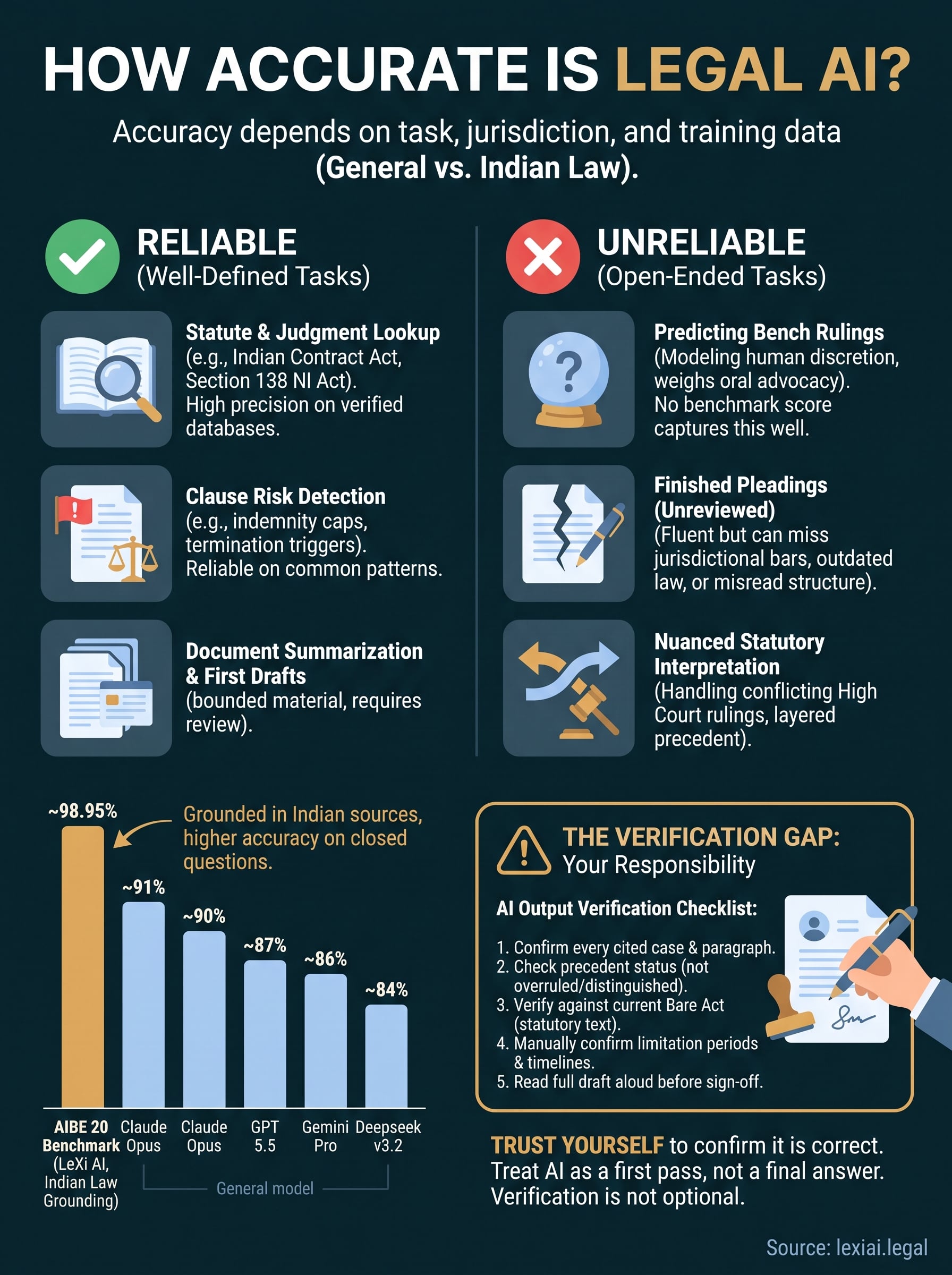
Measuring legal AI accuracy usually starts with a benchmark test, a fixed set of legal reasoning questions with known correct answers, run against a model to see how many it gets right. The AIBE 20 dataset, modeled loosely on the pattern of the All India Bar Examination but expanded for legal reasoning, statutory interpretation, and case analysis, is one such benchmark evaluation now used to compare general AI models against tools built specifically for legal work. Scores on these tests give a useful starting signal, but they measure performance on closed questions with a single right answer, not the messier reality of drafting or arguing a live matter.
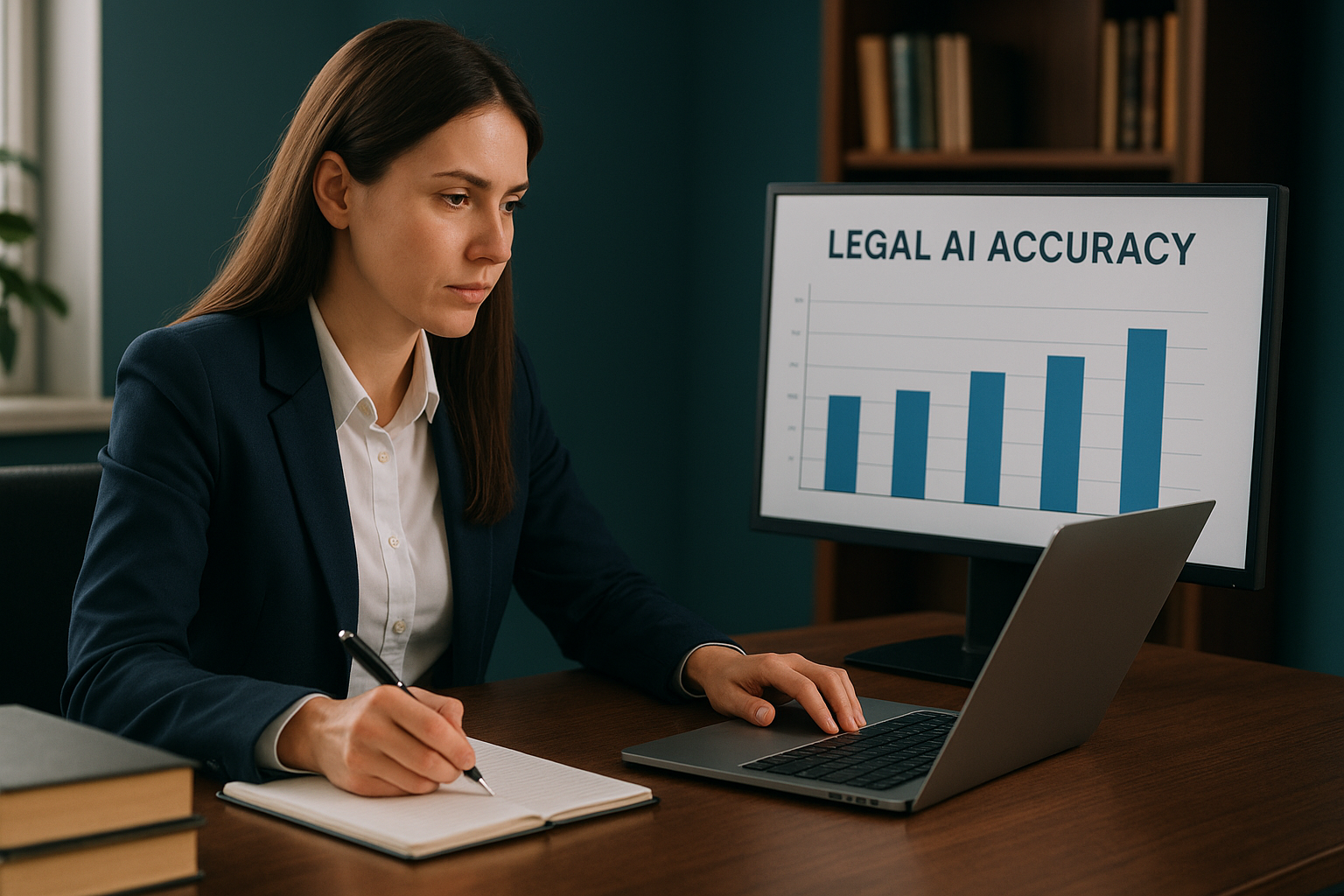
Comparing models on the same benchmark, as several studies pitting AI against lawyers in legal research have done, at least gives lawyers a common reference point instead of relying on vendor claims alone.
| Model | AIBE 20 Score | Primary Training Focus |
|---|---|---|
| LeXi AI | 98.95% | Indian commercial law, statutory and case grounding |
| Claude Opus 4.8 | ~91% | General reasoning, broad legal exposure |
| GPT 5.5 | ~89% | General reasoning, broad legal exposure |
| Gemini 3.1 Pro | ~87% | General reasoning, broad legal exposure |
| Deepseek v3.2 | ~84% | General reasoning, limited jurisdictional depth |
Numbers like these answer how accurate is legal ai for the narrow slice of tasks the benchmark actually tests, mostly statutory recall, precedent identification, and structured legal reasoning questions with defined answers. They say very little about how the same model performs when asked to draft a 40-page written statement or predict a bench's likely view on an interlocutory application, tasks with no single correct output to score against.
Retrieval accuracy is measured differently again. Judgment search tools are typically judged on precision, the share of returned results that are actually relevant, and recall, the share of relevant judgments the tool actually finds. A tool that returns ten cases with nine relevant hits has high precision but may still miss the one landmark ruling that decides the point, which recall would catch. Vendors rarely disclose both figures together, and a lawyer comparing legal AI software should ask for each separately rather than accepting a single blended accuracy claim.
A benchmark score tells you how a model performs on a test, not how it will perform on your case.
Sourcing verification is the third piece. A tool that returns a citation that actually exists, links to the original judgment text, and quotes it correctly is doing something meaningfully different from one that generates plausible-sounding case names from pattern recognition alone. That distinction, verifiable sourcing versus fluent guessing, matters more for real practice than any single percentage figure a marketing page displays.
Where legal AI is reliable, and where it still fails
Reliability in legal AI is not a single switch that turns on or off. It varies by task, and the pattern is consistent across every tool tested against the AIBE 20 benchmark, including LeXi AI. Tasks with a defined, checkable answer perform far better than tasks that ask a model to predict human judgment or generate original argument from scratch.
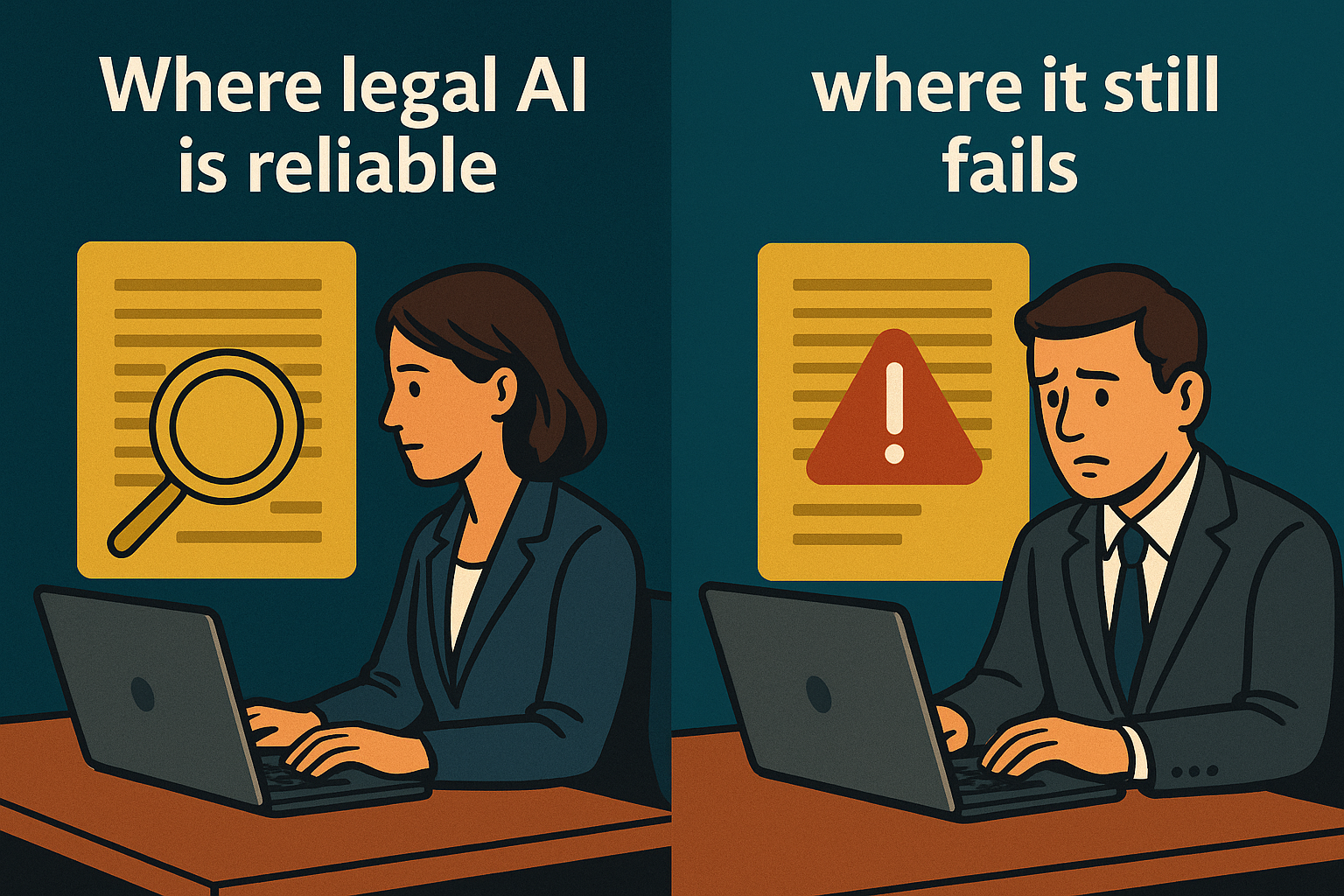
Tasks where legal AI performs well
Statute and precedent lookup is where legal AI accuracy is strongest today, because the answer already exists in a fixed text and the model only needs to find and quote it correctly. Clause risk flagging in contracts, such as spotting an uncapped indemnity or a one-sided termination clause, works well because the pattern of risk is well documented and repeatable across thousands of prior agreements. Summarizing a 400-page case file into a working brief is another strong area, since the source material is bounded and the task is compression, not invention.
- Judgment search and statutory lookup: high accuracy when AI-assisted legal research draws on verified databases.
- Clause risk detection: reliable for common patterns like indemnity, liability caps, and termination triggers.
- Document summarization: strong performance on bounded, well-structured source material.
- First-draft generation: useful starting point when the draft is reviewed line by line before filing.
Tasks where legal AI still fails
Unstructured prediction is where every tool, general or specialized, struggles the most. Asking an AI system to forecast how a particular bench will rule on a novel point, or to weigh oral advocacy against written pleadings, asks it to model human discretion, something no benchmark score captures well. Nuanced statutory interpretation involving conflicting High Court rulings on the same provision, a common situation under the IBC and the GST Act, also trips up models that were not trained specifically on the layered structure of Indian precedent.
Reliable on lookup and pattern matching, still unreliable on prediction and judgment.
Finished pleadings drafted without review sit in the same risky category. A model can produce fluent, well-structured prose that reads convincingly while missing a jurisdictional bar, an outdated limitation period, or a citation that no longer holds good law after a later ruling distinguished it. This is the exact failure pattern that produced sanctioned lawyers abroad and prompted Indian judicial committees to push for verification protocols before AI-drafted material reaches a courtroom.
General-purpose models widen this gap further because they lack grounding in Indian statutory structure. Vendor benchmark scores describe performance on the narrow slice of tasks tested, not the full range of legal work a practicing lawyer handles daily, so treat every accuracy figure as task-specific rather than as a blanket guarantee of reliability.
How to verify AI-generated legal work before relying on it
Verification is not optional, it is the step that turns AI output into something you can actually file. Legal AI accuracy improves every year, but no tool available today removes the need for a lawyer to check the work before it goes anywhere near a bench or a client. Treat every AI-generated draft, research memo, or risk flag as a first pass to be checked against sound legal drafting techniques, not a final answer.
Check every citation against the primary source
Open the actual judgment or bare act the AI cites, do not trust the summary alone. A citation that reads correctly can still misstate the ratio, quote an overruled paragraph, or attribute a holding to the wrong bench. Cross-checking against a verified database, rather than a general search engine, catches most of these errors in minutes rather than after a filing has already gone out.
Confirm the statutory text is current
Statutes get amended, and an AI model trained on older text will confidently quote a repealed provision as if it still applies. Before relying on any statutory reference, confirm the section number and wording against the current bare act, particularly for fast-moving areas like the IBC, GST law, and the Arbitration and Conciliation Act, 1996 after its 2021 amendment.
Run a structured review before any filing
Build verification into your workflow as a fixed step, not a habit you rely on remembering.
AI Output Verification Checklist
1. Confirm every cited case exists and check the actual paragraph quoted
2. Confirm the precedent has not been overruled, distinguished, or reversed on appeal
3. Confirm statutory section numbers against the current bare act
4. Confirm limitation periods and procedural timelines manually
5. Read the full draft aloud once before signing off
Trust the AI to find the material fast. Trust yourself, and only yourself, to confirm it is correct.
Watch for confident-sounding errors
Fluent prose is the biggest trap in AI-assisted legal work. A poorly reasoned argument written by a junior associate usually reads awkwardly, which signals you to look closer. An AI-generated argument reads smoothly even when the underlying reasoning is wrong, so the writing quality gives you no warning at all. Slow down specifically on passages that sound most polished, since that is where errors hide best.
Document the review, not just the output
Keep a record of what you checked and when, especially for court filings. If a citation error surfaces later, a documented review process shows the court and your client that verification happened, even if a specific error slipped through. Firms using tools like LeXi AI's litigation preparation suite still assign a reviewing associate to sign off before any AI-assisted draft leaves the office, and that habit is worth building regardless of which tool you use.
How LeXi AI approaches accuracy for Indian law
The LeXi AI platform was built around a specific bet: that a model trained on Indian statutory text, case law, and procedural rules will consistently outperform a general model retrofitted for legal use. That bet is what the AIBE 20 score of 98.95% actually reflects, not raw model size but grounding in the source material Indian lawyers actually cite. Legal AI accuracy improves when the training data matches the jurisdiction, and that principle shapes every product decision behind the platform.
How grounding in Indian sources changes the output
Questions on Section 138 of the Negotiable Instruments Act, IBC timelines, or GST assessment orders get answered against the current bare act and verified judgment databases, not a general internet crawl. LeXi Agent returns citations with links back to the original judgment text so a lawyer can confirm the ratio before quoting it, rather than trusting a summary generated on the fly. LeXi Desk applies the same discipline to contract review, flagging clause risk against Indian Contract Act, 1872 bare act principles rather than common law defaults imported from US or UK templates.
Accuracy in legal AI comes from what a model was trained on, not how confidently it writes.
Where the platform still expects a lawyer to check the work
No benchmark score, including a 98.95% one, changes the underlying rule that a lawyer signs the pleading, not the model. LeXi LiTT accelerates drafting and case strategy at scale, but final review before filing stays with the advocate, exactly as it should under the Advocates Act, 1961. Contract summarization, judgment search, and clause flagging all speed up the first pass. Prediction of how a bench will rule, and finished pleadings pushed out without review, remain squarely in the category where every AI tool, LeXi AI included, needs a human check.
What this looks like across the product line
| Tool | Primary task | Verification built in |
|---|---|---|
| LeXi Agent | Legal research, precedent analysis | Linked source judgments |
| LeXi Desk | Contract lifecycle, clause risk | Indian Contract Act grounding |
| LeXi LiTT | Litigation drafting, case strategy | Lawyer sign-off before filing |
| LeXi Academy | Guided legal learning | Structured practice, not live filings |
Students using LeXi Academy get the same grounding in a lower-stakes setting, which matters because building the habit of checking AI output against primary sources should start before a lawyer's first filing, not after a mistake.
What this means for your practice
So, how accurate is legal AI in practice? Strong on lookup, retrieval, and pattern-based tasks. Weak on prediction, and unsafe on finished drafts pushed out without review. That split matters more than any single benchmark number, and it should shape how you build AI into your daily workflow rather than whether you use it at all.
Treat every AI-generated citation, clause flag, or draft as a first pass that still needs your signature behind it. Verification discipline protects your clients and your license far more than any vendor's accuracy claim ever will. Tools grounded in Indian statutory text and case law, rather than retrofitted general models, close much of that gap, but none of them remove your responsibility to check the work.
If you want to see how a legal AI platform built specifically for Indian law handles research, drafting, and contract review, try LeXi AI free and run it against a matter you already know well.